The Legend of Tristan and Iseult
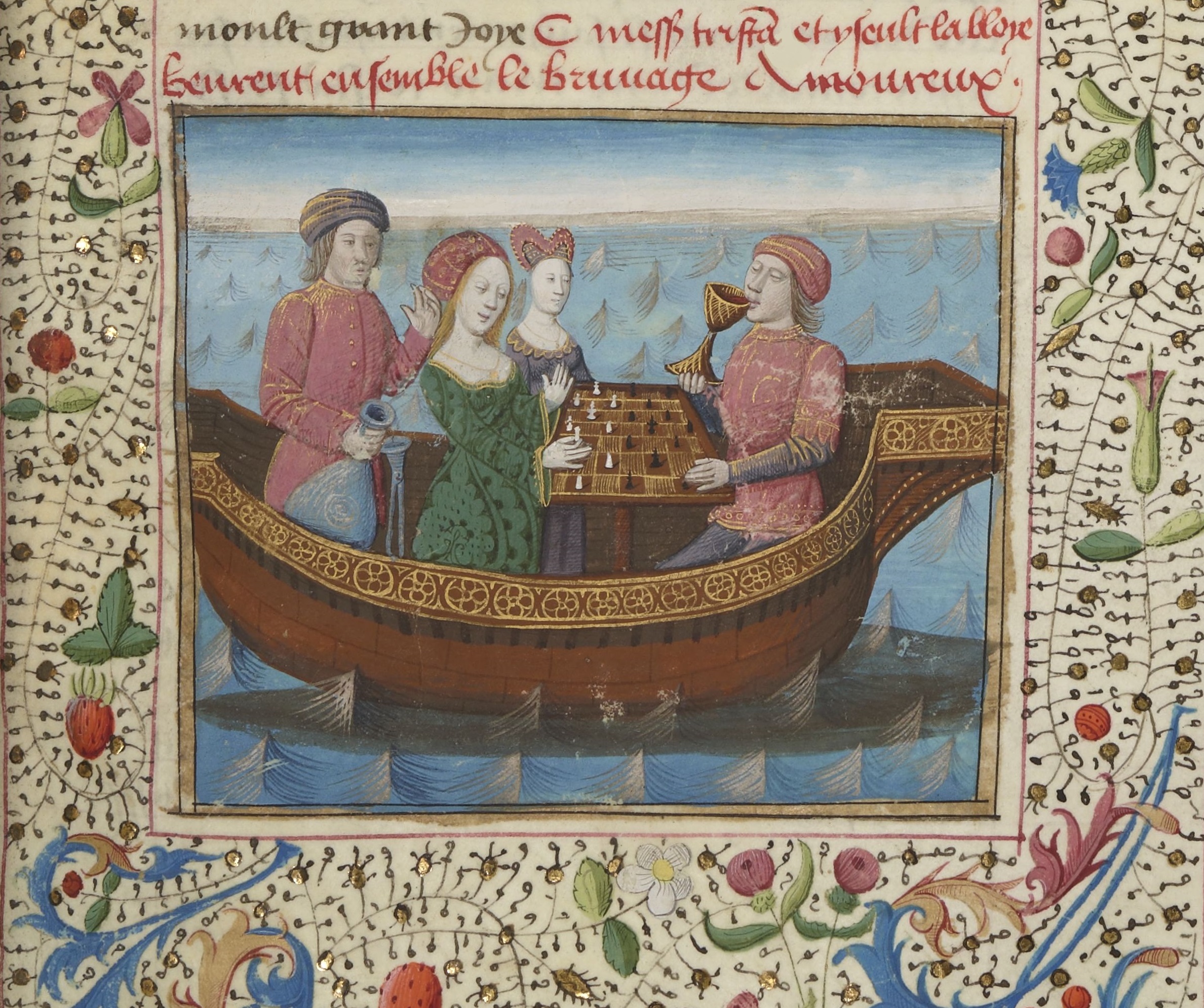
Source: Wikimedia Commons. Public domain.
Tristan is the hero of one of the best-known legends of Celtic origin. It is possible that the figure of Tristan goes back to a historical personage from Cornwall, as would seem to be demonstrated by his funerary stone between Tintagel and Bodmin, where he is called "son of Conomorus", another name for King Mark. Be that as it may, the legend assimilated him to the Irish hero Diarmaid, lover of Gráinne: a comparison of both tales leaves little room for doubt on this point.
Symbolically, Tristan represents the moon, while Iseult is the image of the sun. The prose novel of the thirteenth century emphasizes the fact that Tristan would die if he did not have intimate relations with Iseult at least once every month. All of this is closely related to the Celtic calendar, which is a lunar calendar. Moreover, in the Celtic languages, the moon is of masculine gender and the sun, feminine.
In the original myth, Tristan does not love Iseult, but is compelled to love her by the power of the terrible geis (spell) cast upon him by Iseult, a detail that was replaced in the French texts by the theme of the magic potion drunk by accident.
Similarities between Tristan and Lancelot
Like Lancelot, Tristan may be considered a model of the courtly knight: brave, invincible, a brilliant poet. In the Welsh tradition, the character possesses more mythological elements, since he is indeed endowed with fearsome powers: the wounds he inflicts are always fatal and, conversely, all those who dare to wound him die.
About Iseult
Ultimately, Tristan’s tragic death is not a consequence of the poisoned wound he has received, but is due to the fact that Iseult arrives too late: the sun cannot restore to the moon the light it needs. The symbolism is very evocative.
Iseult, Isolde, or Yseult, daughter of the king of Ireland and wife of King Mark of Cornwall, is thus Tristan’s lover.
Her archetype corresponds to the Irish Gráinne, whose name derives from the word grian, meaning "sun".
Iseult, "the Fair", is the oldest representation of the solar goddess of the Celts. In the myth, she lends life, warmth and light to her lover Tristan, the moon.
She thus represents Woman in her most complete and radiant aspect. She corresponds to the image of an all-powerful divinity: the Artemis of the Scythians of whom Herodotus speaks.
The name Iseult is not of Celtic origin, but derives from the Germanic-Scandinavian hild, meaning "girl". It is therefore assumed that there is Icelandic influence in the legend.
Plot
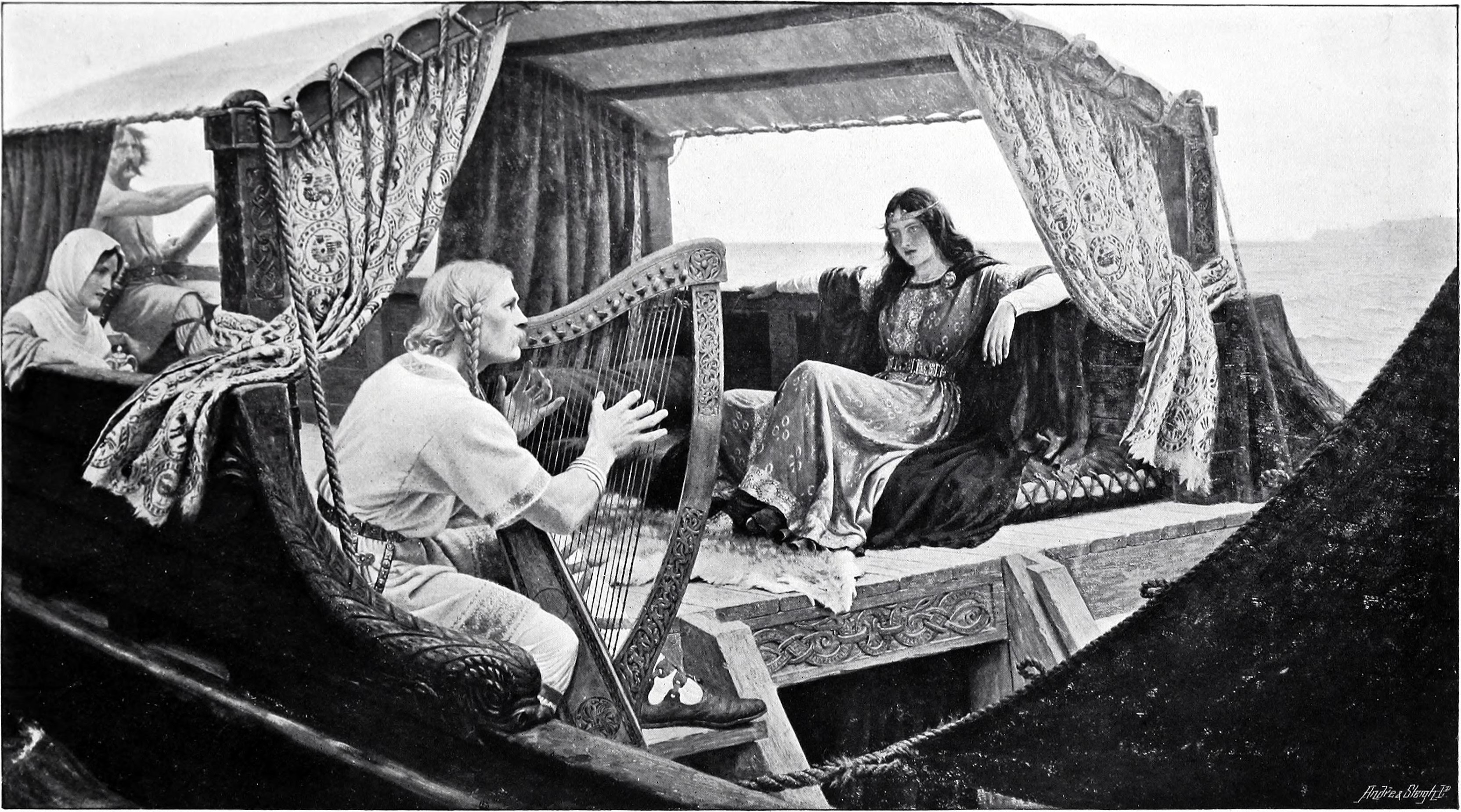
Source: Wikimedia Commons. Public domain.
Tristan was a young knight in the retinue of his uncle, King Mark of Cornwall. One day, when a swallow let fall a golden hair at his feet, he declared that he would marry its owner. Tristan sets out in search of her and arrives in Ireland, where he slays a dragon that was ravaging the country and requests the hand of Iseult, the king’s daughter, the woman he had been seeking. Tristan then takes Iseult back so that the princess might wed King Mark. Iseult’s mother prepares a magic potion and gives it to her daughter’s handmaiden, Brangaine, so that she might give it to the king to drink, thus ensuring his love for her daughter. But the handmaiden, by mistake, gives Tristan the potion to drink, and he falls hopelessly in love with the princess.
Yet Iseult marries Mark all the same, though she continues to be Tristan’s lover. On several occasions, they narrowly escape being discovered...
There are different endings depending on the tradition:
-
King Mark, consumed by jealousy, kills Tristan, in whose dying embrace he also kills Iseult, and they are buried side by side.
-
Tristan is banished and marries another Iseult (Iseult of the White Hands). But he remains hopelessly in love with Iseult and wastes away with longing for her. When Tristan is on the point of death, having sent for Iseult so that she might heal him, his wife tells him that the ship sent to bring her is flying black sails, which is a sign of rejection. Tristan then dies of grief. But Iseult does come on the ship, and she too dies of grief.
-
After his banishment, Tristan returns to Cornwall and feigns madness in order to see Iseult again. People mock him, but he manages to see her. In other versions, Tristan truly goes mad.
See different editions of Tristan and Iseult.