---
title: The Celtic Cross
description: Information on the origin and significance of the cross in the
Celtic tradition.
author:
name: Graciela Paula Caldeiro
url: http://graciela-caldeiro.idoneos.com
canonical: https://mitologiacelta.idoneos.com/en/la_cruz_celta/
source: en/la_cruz_celta/index.md
---
The Celtic Cross
The cross predates by far the spread of Christianity among the Celtic peoples. Indeed, it can already be found on objects belonging to the Bronze Age.
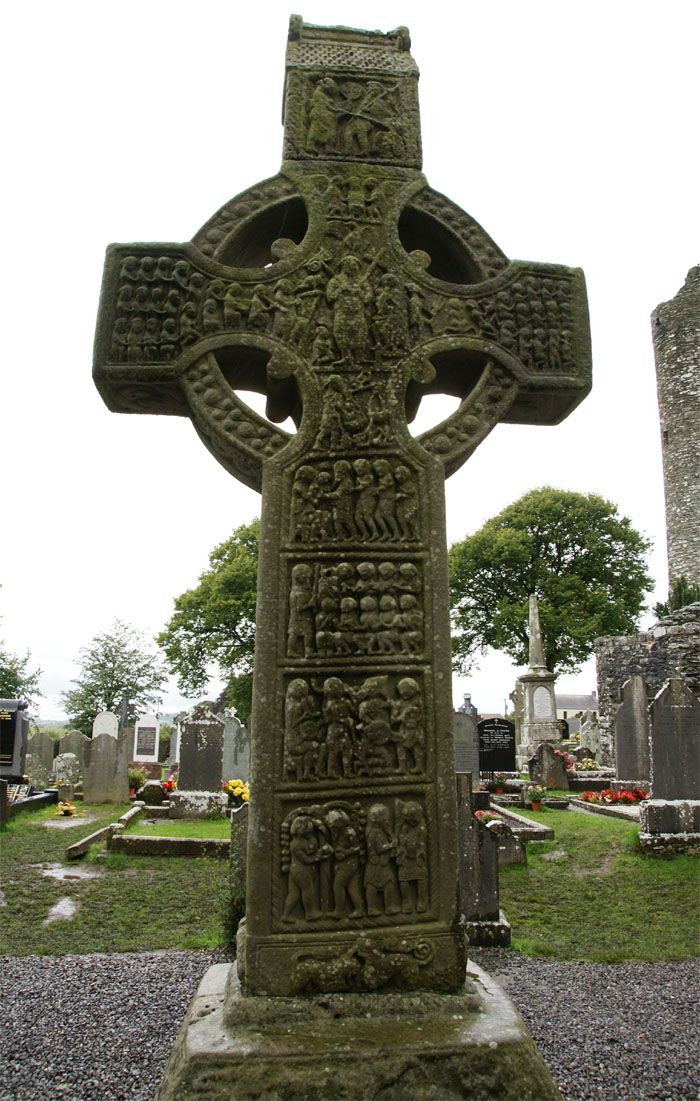
Muiredach's Cross at Monasterboice, Ireland. Photograph: Hopmans (Otter). Source: Wikimedia Commons. CC BY-SA 3.0.
When the Christian faith was introduced into **Ireland** and **Scotland**, this symbol was adapted to the Latin cross and decorated, in the manner of the Breton calvaries, with numerous carvings.
Probably the earliest Christian Celtic crosses can be found among the Picts, in Scotland, and date from the end of the sixth century. They then appear to have spread throughout Ireland, though no pieces as ancient have been found either in Great Britain or in Armorica. Celtic crosses are masterworks belonging to the tradition of menhirs and Gaulish _lechs_, that is, those _simulacra_ of which Caesar speaks, which are stone and wooden pillars representing [Lug](/en/303808/).