---
title: "Halloween: Samhain (Samain or Samhuin)"
description: Origins of the Celtic festival of Samhain (Samain or Samhuin)
author:
name: Graciela Paula Caldeiro
url: http://graciela-caldeiro.idoneos.com
canonical: https://mitologiacelta.idoneos.com/en/halloween/
source: en/halloween/index.md
---
Practically all the celebrations of all the mythologies of all peoples bear some relationship to the emergence of agriculture, the transition of human beings from nomadic hunter-gatherers to settled farmers, and the discovery by nascent consciousness of astronomical periodicities, the seasons, and so on..
Hence practically all the celebrations of all the peoples of the world coincide with the solstices, the equinoxes, or some other astronomical event that applies in some way to crops or another productive activity, and almost always the discovery or confirmation of the cyclical nature of the seasons is associated by mythology with eternity.
The meaning of Halloween
The great feast of the **First of November** is the most important in the **Celtic calendar** because it gave rise to large gatherings of people and to rituals of great complexity. The feast of **Samain** means etymologically **_"end of summer"_**, and refers to the moment when the herds must be shut inside the stables, which is indicative of a society whose economy is based on **_animal herding_**.
Symbolically, the night of Samain represents **eternity**. It is a moment in which time is abolished and the world of the **sidh** (etymologically "peace"; it is the domain of the gods, the heroes and the dead, the Celtic Otherworld) opens to the world of the living.
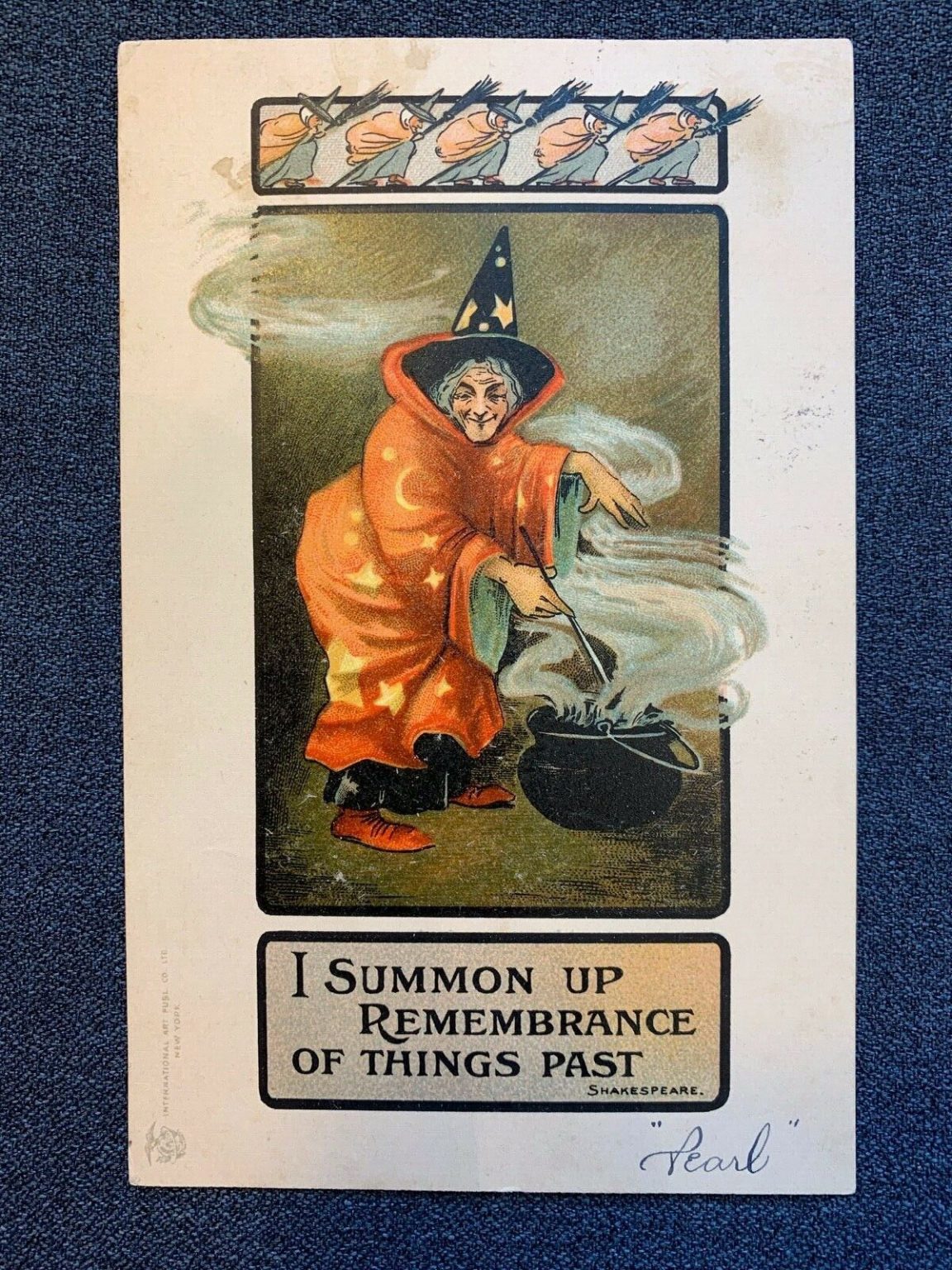
Halloween postcard featuring a witch, from the 1910s. Source: Wikimedia Commons. Public domain.
Christianity appropriated this feast and promoted its syncretic version in the feast of **All Saints**, that is, the perfect communion between the living and the dead. In countries of Anglo-Saxon tradition, the celebration of Samain is known as Halloween, and, through globalization, it currently spreads even to countries of Catholic tradition, acquiring clear overtones of a popular festivity associated with unambiguous icons of mass consumption such as pumpkins and various costumes.
We also recommend:
[Scary stories to tell at Halloween](https://cuentos-infantiles.idoneos.com/cuentos_de_terror)
.